



Making (literal) waves with AI |
11/06/2026
Yichen Liu ’28 started swimming competitively at age five. While most children were still navigating water wings, he was timing laps. By age six, Yichen was the fastest 50-metre freestyle swimmer in his region — the sprawling metropolis of Beijing. Yichen laughs before modestly adding, “There weren’t actually that many kids competing at that age, so it’s not as impressive as it sounds.” Either way, he’s been swimming laps around his peers ever since.
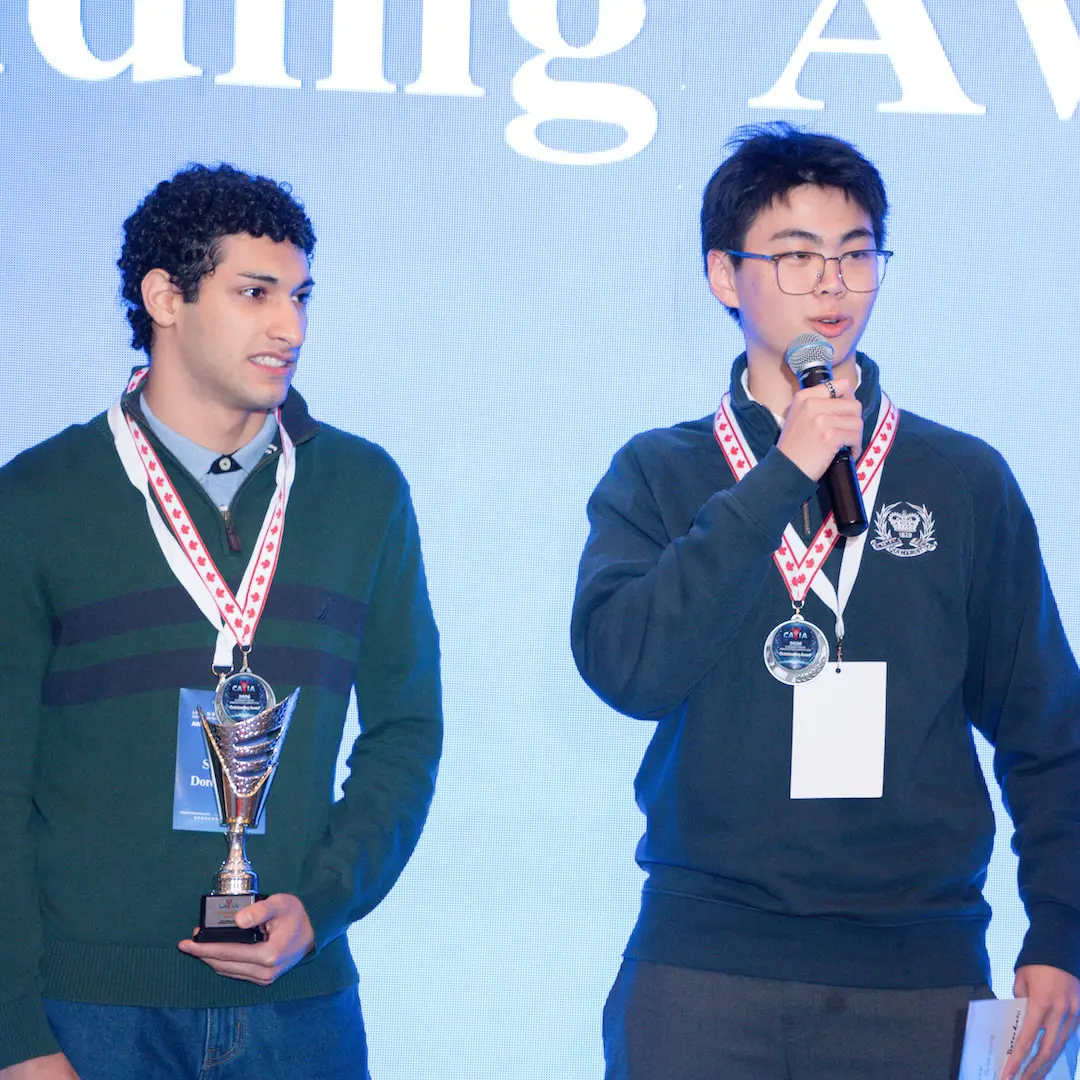
Given how much time he spends in the water, it’s no surprise that when Yichen decided to enter the 2026 Canada Youth Innovation Competition, he created an AI swimming coach called LaneLab.
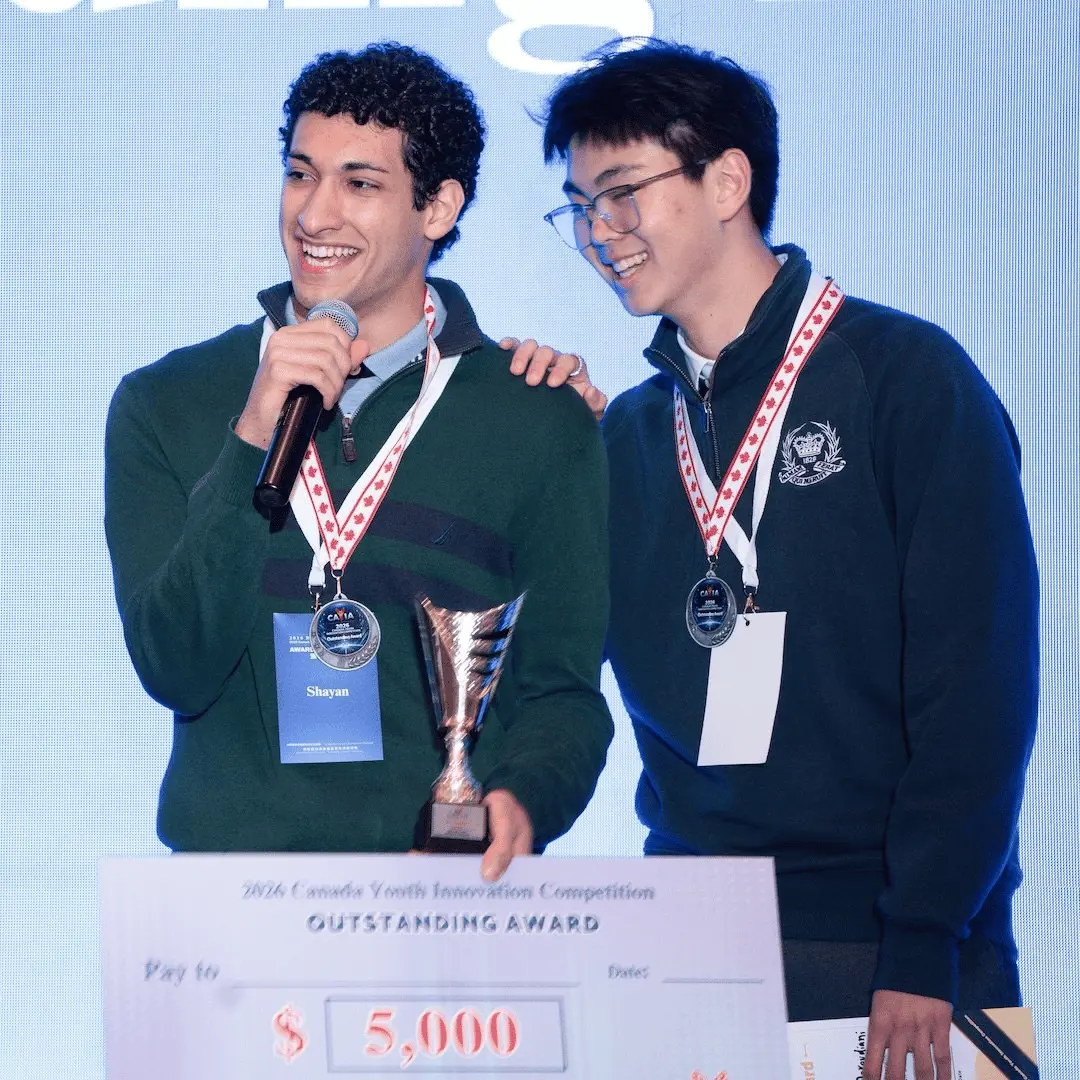
Yichen partnered with Shayan Douroudiani to design the app. The pair met through their swim team, RAMAC (Roman and Marc Aquatic Club), where Yichen is a sprinter, racing in freestyle and butterfly.
Shayan, who is a couple of years older, is studying engineering science at the University of Toronto and coaches swimming on the side. He wrote the code and imported the data for the project (they scraped statistics from 5,000 swimmers), while Yichen managed the interface and UX design.
“People in swimming love statistics, percentages and tracking their performances,” Yichen says. “Shayan and I wanted to give them a way to understand how they’re progressing and how to improve their times.”
The duo’s app can generate target splits and goal times. But rather than simply giving swimmers a time to aim for, it calculates where those extra few seconds might be gained. “The splits also tell us something about how you swim,” Yichen says. “If all four are 30 seconds, you’re swimming at an even pace — you’re neither particularly fast off the start nor slowing down towards the finish. Ideally, a 200-metre race should ebb and flow a little, with perhaps a slightly slower middle section and a stronger finish.”
This extra layer of analysis, beyond the raw data, is what made the app stand out and win the Best Commercial Potential award at the competition, which is organized by the Youth Innovation Award Foundation.
“I thought LaneLab had a really deep understanding of the problem that swim coaches face,” says Alex Cui, co-founder of global AI start-up GPTZero. “They turned that into an intuitive, easy-to-use product that leverages AI to bring the world’s best swim coaching routines to the hands of anybody.”
Cui launched the Youth Innovation Award Foundation as a way to create opportunities for young people to develop and market solution-driven ideas across disciplines. “I want to fuel the ambition and dreams of the awardees, as well as connect them to mentors who will help them become the next wave of star innovators.”
Yichen credits UCC’s academic rigour with helping him develop the skills he needed to create the app and win at the competition. “The school definitely encourages innovation and ingenuity in students,” he says. His longstanding passion for computers also helped.
“When I was 12, I got my mother to cave and buy all the components I needed to build a computer, and I assembled it myself,” he says. “I’ve been interested in computers and technology ever since.”
Winning the innovation award has added a little extra flutter to the freestyler’s kick. Yichen plans to invest the $5K in prize money in a future product, although he won’t reveal much about it, beyond saying, “I have an idea I’m working on.”
Yichen’s goal with LaneLab wasn’t to replace swim coaches, but to use AI to make more sophisticated performance analysis accessible to swimmers at every level. It’s an approach that reflects what Alex hopes the competition will encourage. “I think often people use AI as a way to do more with less,” says Alex. “I think many of the ideas we saw in our competition were about how to use AI to do more with more.”
After the ceremony, Alex reached out to Yichen with the idea of starting an innovation club at UCC, something Yichen hopes to help make happen, provided he can fit it around his intense training schedule (he’s hoping for a swim scholarship). “I train between 11 and 15 hours every week,” he says. “I’d love to swim at university.”
— Antonia Whyatt