


Teaching music as a life skill |
10/18/2024
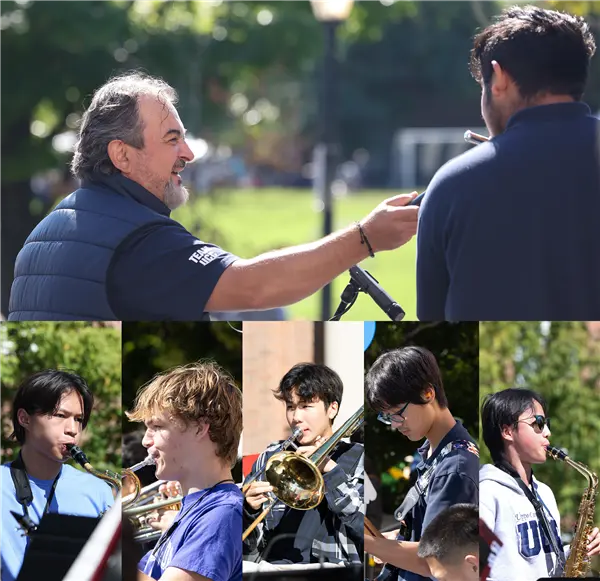
With Music Night fast approaching, UCC News spoke with Chris Cigolea, who, in his third year in the music department, teaches Years 8, 9 and 10 and runs the intermediate jazz, senior jazz and symphonic bands.
The classically trained trumpet player is both live performer and recording artist. Notable releases include Tribute to an Idol (2006) and The Trumpet Shall Sound (2008), a collaboration with organist Simon Irving. He founded the C.I.G. School of Performing Arts in Guelph and is former music director of the Guelph Concert Band. He taught at the University of Guelph.
Cigolea has good reason to be proud of his students, who this past May took home gold in the instrumental jazz division at The Nationals at MusicFest Canada, held at the University of Toronto. This year’s bands and orchestras get to strut their stuff at Music Night on November 6 in Laidlaw Hall.
How many students are involved in the music programs this year?
It’s probably more than 300 in the co-curricular bands and orchestras alone. We have a lot, and I’m not complaining! It’s great to see so many young musicians. I lead intermediate jazz, where I have more than 40 students, and it’s such a joy to see all those Year 9 and 10 students coming here twice a week and waiting for me in the classroom at 7:15 a.m. It’s rare nowadays to be in a place where music is so appreciated.
Where do they get this passion for jazz?
Many students in the earlier years take private lessons in instruments such as piano and violin. In Year 9 classes, I introduce them to blues and blues improvisation, and then jazz in Year 10. What we’re trying to do is inspire them. For many of them this will be the only time they’ll be playing in a jazz band, wind ensemble, or symphony orchestra. After this they’ll be in university, then the workforce.
But jazz builds their creativity and confidence. We want our kids to become leaders, and leaders must have those qualities. We teach some jazz history, and when they come to me and say, “I could play this solo,” it’s wonderful to see. We want them to understand this music helps with life skills. We’re teaching them how to improvise, and for that they need to be creative.
You know music education well, having studies at Wilfred Laurier and the University of Toronto. What are some things you've carried over from those experiences into your own teaching, or what might you want to avoid?
I’m trying to avoid mediocrity. I want students to understand they need to give their best in pursuit of anything. I try to understand everyone’s level individually, and I don’t have a one-size-fits-all teaching style. I adjust to the student. Everybody’s different and you can’t teach everyone the same things and expect the same result.