


Trio thrives in coding competition |
12/07/2022
It was an impressive third-place finish for the team from UCC’s Coding and Algorithms Academy.
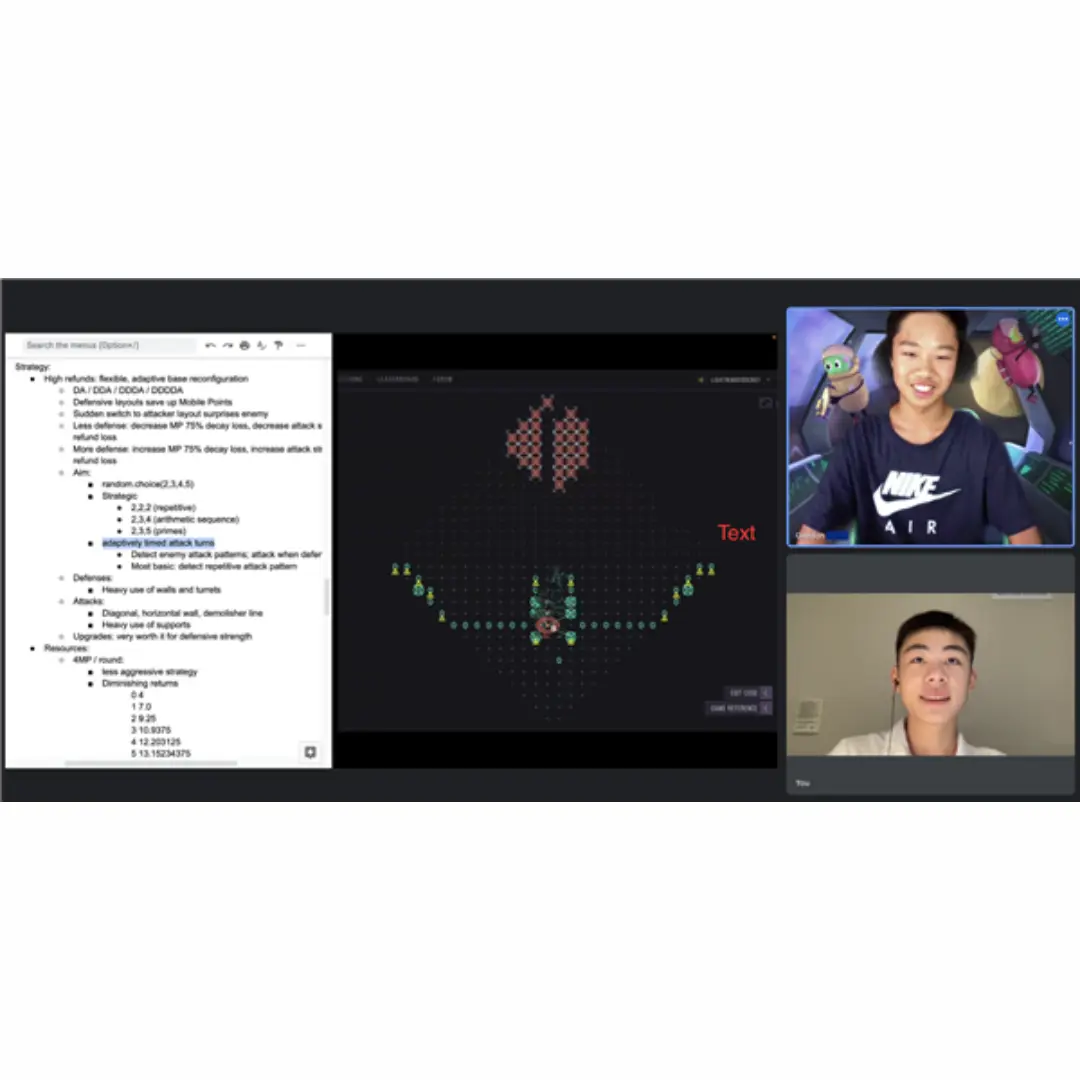
Gordon Liang, Nicholas Cheng and Gabe D’Souza took part in a high school programming competition this summer run by Correlation One, a technology company focused on data literacy. The competition required them to create an AI algorithm to govern the moves made by their online bots in a game called Terminal. Competing in a field of 35 teams, the trio earned third place.
“I haven’t participated in a competition like this before,” says Gordon, a Year 11 student who has been coding since Year 8. “I usually just code my own projects.”
Nick, a Year 10 student who began coding in Year 6 and is also involved in robotics, adds, “I jumped on it. I’m really interested in artificial intelligence, so when I saw an AI competition, I got really excited.”
Gordon likens Terminal to a highly advanced game of checkers, conducted on a virtual diamond-shaped board. The bots for two opposing teams face off, trying to evade the defences strategically placed by their opponents and attempting to reach the other side of the board. Unlike the aforementioned game, however, when the competition begins, both teams move simultaneously using the strategy the programmers have coded for them.
This competition used a round robin, grouped format. The top two per group moved on to the next round until only four teams remained.
In preparation for the challenge, the UCC team members each coded an algorithm for the bots and had them face off other online players to see whose had the highest rating.
“It took us half a week to understand what worked and what didn’t,” says Nick.
Since Gordon scored highest, the team chose him to represent them by doing the coding for the actual competition. The contest organizers released the final rules a week before the deadline, allowing competitors six days to tweak their algorithms before submitting them for combat.
“I coded the strategy into the play and programmed the attackers and the defenders, then submitted the entire code,” Gordon says. “Once the game begins, the program executes. You have to do some guessing; since you don’t alternate moves, you don’t get to think about what your opponent is doing and how to counter the moves.
“I would spend six hours a day coding and lie awake at night thinking about my strategy. It was very intense and exciting. Nick was quite involved, too; he had his own version of the code and he’d play against me. It was fun working with other people.”
Adds Nick, “Our design was reactive, not hard coded. The way our bot performed depended on how many lives we had, which round it was and what the opposition was doing.”
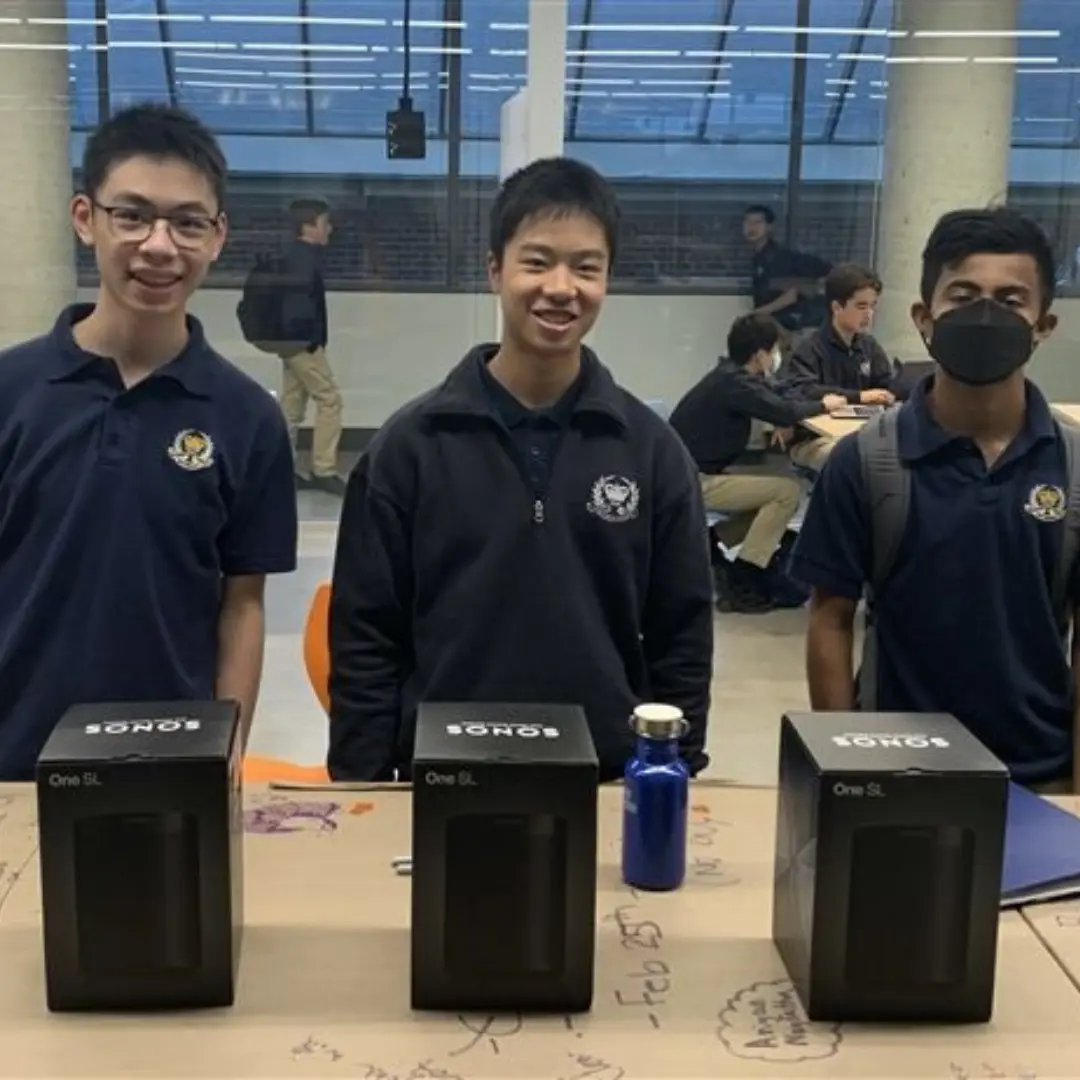
The team’s third-place finish earned each member a Bluetooth speaker that they donated to the Upper School’s Atkins Family Design Lab.
Says Nick, “We definitely wanted to give back to the design community for introducing us to the competition and for teaching us.”
Paul Miskew, Upper School design chair, said the competition provided the students with lessons they can share with their fellow coding academy members. He was touched by having the prizes donated to the design lab.
“It speaks to the team’s connection to the school and their willingness to give back,” Miskew says.