

UCC at the forefront of IB DP Systems Transformation Graduation Pathway global rollout |
10/03/2026
“It's a bold statement, but I believe we're leading an evolution of liberal education here at the College,” says Vice-Principal of Learning and Academic Innovation Dr. Julia Kinnear.
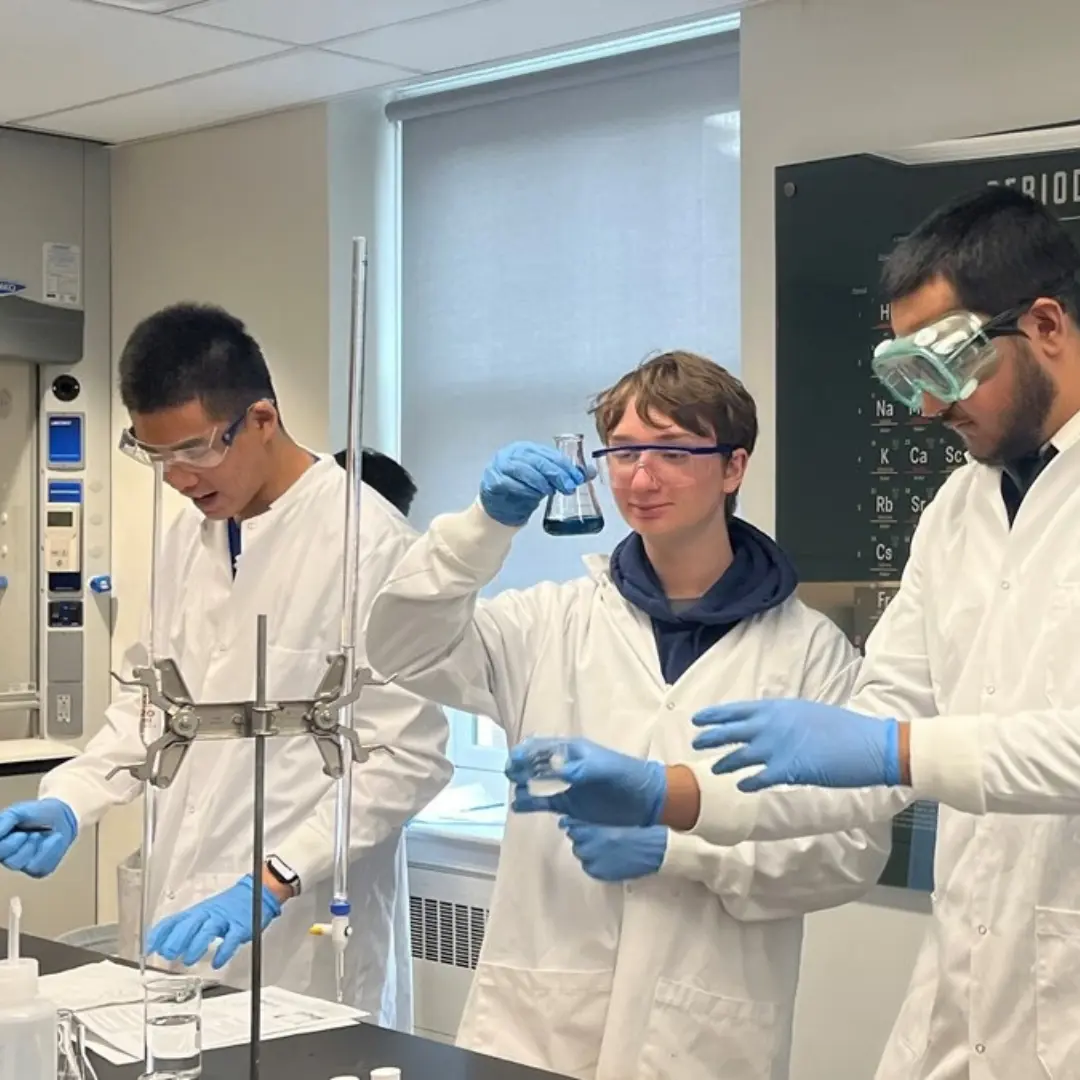
UCC is one of only four schools worldwide delivering the pilot Systems Transformation program. It launched in September 2025 and is an interdisciplinary stream that merges systems thinking and design thinking with digital innovation tools and approaches. The emphasis on action that is at its heart will soon be offered to students around the world.
Passionate about climate change and sustainability, Evan Currie from the Class of 2027 applied to the first cohort of the pathway to focus on environmental challenges — and solutions. What makes it different, he says, is that students learn the theory, and then have opportunities “to go out and intervene in real-world systems.”
Earlier this year, the International Baccalaureate decided to scale Systems Transformation globally, with a first group of early-adopter schools joining in 2028 and IB schools worldwide able to offer it by 2030. UCC will serve as a regional hub, helping support implementation and resource development throughout the global rollout.
With the IB offered in more than 6,200 schools across 160 countries, UCC is helping advance education on a global scale.
At the centre of UCC's model is Systems Transformation: Innovation for a Better World, a two-year course developed by the College in partnership with the IB. It challenges students like Currie to understand complex issues, and reflects the commitment of both UCC and the IB to create, test and hone approaches to teaching and learning that are transdisciplinary, innovative and engaging.
While all four pilot schools focus on systems thinking and project-based learning, UCC's model has several unique features. Through its team-taught and transdisciplinary approach, students examine challenges through the lenses of wellbeing, pluralism and sustainability. Grounded in design thinking, students move through multiple cycles of identifying problems, designing interventions, reflecting on outcomes and applying what they've learned. Most importantly, they are not assessed on the success of their solution, but on what they learn through the process.
“This is so powerful because it allows students to take risks,” says Tanenbaum-Hutcheson Director of Partnerships Jon Kwan ’96. “When you know ‘going big’ might lead to failure and a bad mark, you’re going to do just enough. But when you’re graded on the process, you can be much more ambitious.”
Another distinctive aspect of UCC’s approach is an emphasis on community partnerships and intergenerational learning. Students work with alumni, industry leaders and community organizations, while advisers help shape the pathway and provide mentorship. Meanwhile, donor support helps secure high-profile guest speakers and experiential learning opportunities.
“The UCC community is broad, it's invested, it's connected,” says Justin Madhany, founding partner of Prodigy Group, UCC parent, member of the pathway's advisory council and donor to the program. “Our community can support this program through the funding it requires and through direct access to experienced individuals and leaders.”
As just one example, students will apply their learning this year through capstone projects developed with community partners. Challenges include helping the City of Toronto’s real estate service CreateTO evaluate city-owned properties to balance affordable housing, green space and revenue; working with Toronto Water on urban resilience and stormwater management; and supporting recycling company TerraCycle as it explores ways to build more effective collection networks across Canada.
“Today's students need to know how to solve problems, how to innovate, and how to fail fast and learn,” says Andrew Wright ’81, member of the advisory council and donor. “All forms of work are being reinvented, and these skills will be crucial to thriving in this new world.”
For Currie, now in his second year of the pathway, one of the most important lessons has been looking beyond the visible symptoms of a problem to find its “root” — the leverage point where an intervention can have the greatest impact. In one project, he and a classmate traced pollution in Lake Ontario upstream to a river fed by storm sewers, proposing a filtration system at the source.
“This course has made me feel much more hopeful about my ability to make a positive impact,” he says.
And as the pathway expands globally, UCC's model will help equip a new generation of students to navigate complexity and create change.