


Leaders and Legends |
This list of trailblazing alumni is impressively long and constantly growing
IN THIS SECTION
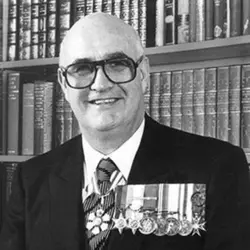
John Black Aird ’41, OC, OOnt
A career politician and passionate advocate for individuals with disabilities, John served as a Liberal senator before becoming chairman of the Institute for Research on Public Policy in Montreal; was appointed chancellor of Wilfrid Laurier University in 1977; served as Ontario’s 23rd lieutenant-governor; named a companion of the Order of Canada in 1993; and named a member of the Order of Ontario in 1987.
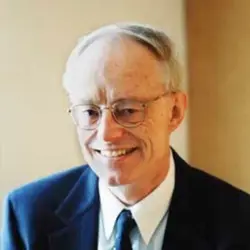
James Arthur ’62, CC
Considered one of the top mathematicians in Canada and the only Canadian to serve as president of the American Mathematical Society, James is the Ted Mossman Chair in Mathematics at the University of Toronto, and has been a professor at U of T since 1978.
In 2015, James was awarded the Wolf Prize in Mathematics from the Wolf Foundation. This prize is considered by many to be the precursor to the Nobel Prize, and marks only the second time it has been won by a Canadian.
James was Head Boy at the College in 1962, and went on to study at U of T and Yale University. He was elected a Fellow of the Royal Society of Canada in 1981, a Fellow of the Royal Society in 1992 and a Foreign Honorary Member of the American Academy of Arts and Sciences in 2003. In 2012, he became a Fellow of the American Mathematical Society. James was appointed a companion of the Order of Canada in 2018, and elected a Fellow of the Canadian Mathematical Society in 2019.
James was awarded the Old Boy of Distinction Award in 2020.
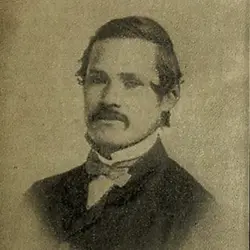
Francis Assikinack
1845
Francis was a 19th-century Ojibwe historian. He was born on Manitoulin Island in 1824 and was raised speaking only Ojibwe. After enrolling at Upper Canada College in 1840, he learned to speak English and at one point went on to become a teacher. He is best known for authoring three important papers that document the customs and culture of the Ojibwe. His father, Jean-Baptiste Assiginack, was a prominent leader of the Ojibwe.
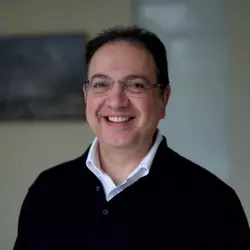
Mehrdad
Baghai ’84
Mehrdad is co-founder and co-CEO of Future Secure AI, an innovative high-growth venture in the enterprise AI space. Mehrdad serves as a distinguished industry professor at the University of Technology Sydney, an appointment that spans all departments. In addition, he is the co-founder and CEO of High Resolves Group, a not-for-profit social venture in citizenship education that has engaged over six million young people worldwide. Mehrdad is also the co-founder of Running Cloud Productions, a film production company, and executive producer of the award-winning films Descent and Diving into the Darkness. He is a frequent lecturer and writer on management theory, particularly in the area of growth strategy.
Mehrdad is a co-author of the New York Times and Wall Street Journal best seller As One, as well as international best sellers The Alchemy of Growth and Granularity. Previously, he was the founder and chairman of Alchemy Growth Partners, a boutique strategy advisory firm that supports large companies on growth strategies and business-building initiatives. Before that, Mehrdad served a three-year term in the public sector as an executive director at the CSIRO, with overarching responsibility for growth and commercialization, during which he launched the famous Wi-Fi patent litigation and spun out dozens of companies. Prior to that, he was a partner in the Sydney and Toronto offices of McKinsey & Company and co-leader of the firm’s worldwide growth practice.
Mehrdad received a BSE with highest honours from Princeton University, an MPP as a Kennedy Fellow at Harvard’s Kennedy School of Government and a JD with high honours at Harvard Law School. He is a Henry Crown Fellow at the Aspen Institute and winner of the prestigious John P. McNulty Prize. He was also awarded a social entrepreneur of the year award by the Schwab Foundation, a sister organization to the World Economic Forum.
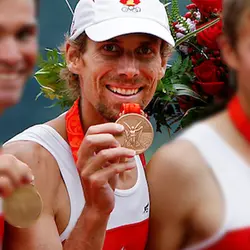
Jon Beare ’92
Jon was a Canadian rower whose passion for the sport started at UCC in 1988. He went on to graduate from University of Western Ontario. In 1993, he participated in the Canada Games in Kamloops, B.C., as a member of the Ontario team and earned gold in the four and silver in the eight.
The following year as a member of the national team, he won a bronze in the men’s lightweight eight at the 1994 Commonwealth Regatta in London, Ont. Jon competed in the Olympics three times (2000, 2004 and 2008), and won a bronze medal in the men’s lightweight fours at the 2008 Summer Olympics with Iain Brambell, Liam Parsons and Mike Lewis.
After he retired from competition, Jon became partner at Hudson Boat Works, a leading maker of rowing shells. He died on October 5, 2023, at the age of 49.
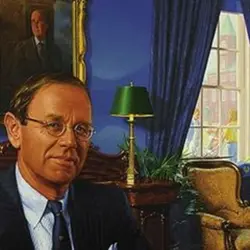
David Ross Beatty ’59, OC
David is a renowned economist, corporate governance expert and founding managing director of the Canadian Coalition for Good Governance. He is a past president of George Weston Foods, a former UCC Board of Governors chair and the academic director of the David and Sharon Johnston Centre for Corporate Governance Innovation, among myriad other achievements and contributions. David was named member of the Order of Canada in 2013 and won UCC’s Old Boy of Distinction Award in 2022.
“The school has always embedded the idea that beyond success, there is significance — that giving back to society as a whole is an obligation and a gift to each student. For today’s students, as for my students at the Rotman School of Management, I have three recommendations. One: to be effective, you have to be reflective — being busy is easy, being useful is not. Two: carpe diem (remember Robin Williams in Dead Poets Society). And three: do unto others as you would be done by.”
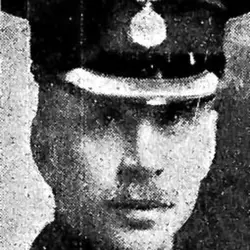
Oliver Mowatt Biggar
1894
After graduating from UCC in 1894, Oliver earned a BA from University of Toronto and a law degree from Osgoode Hall Law School. He was the second judge advocate general for the Canadian Militia and the first chief electoral officer of Canada. He also served as the first Canadian co-chair of the Canada–United States Permanent Joint Board on Defence. Oliver was well known as a leading Canadian lawyer with expertise in public law and patent law.
After the First World War, Prime Minister Sir Robert Borden invited Oliver to attend the Paris Peace Conference as chief legal adviser and member of the Canadian delegation. He was also asked to serve as British secretary of the War Guilt Commission and assistant secretary of the British delegation.
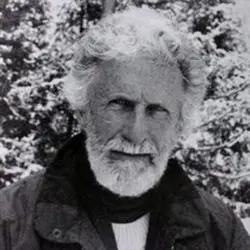
Christopher Chapman ’45, OC
A writer, editor, director and cinematographer who pioneered the split-screen filming technique, Christopher won the Academy Award for Best Live-Action Short Film in 1968 for his film A Place to Stand, which played at Expo 67. He was made a member of the Order of Canada in 1987 and received an honorary Doctor of Laws by Toronto Metropolitan University in 2000. He also served as president of both the Royal Canadian Academy of Arts and the Directors Guild of Canada.
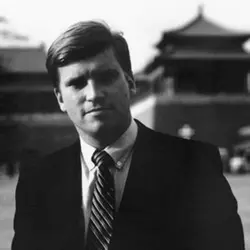
Tom Clark ’71
Tom is a career broadcast journalist with a 45-year tenure covering all manner of stories, from the fall of the Berlin Wall to the war in Iraq. He was formerly the Washington bureau chief for CTV. He moved to Global News in 2011 before retiring from journalism in 2016. He currently serves as Canada’s consul general in New York.
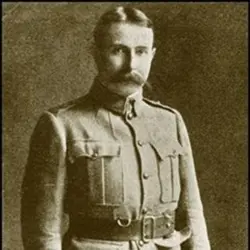
Hampden Zane Churchill Cockburn
1881
Hampden, son of UCC Principal George R.R. Cockburn, received a Victoria Cross — the British Commonwealth’s highest award for military bravery — during the Second Boer War.
In the fall of 1900, Hampden served in South Africa with the Royal Canadian Dragoons. At Liliefontein, a farm outside of Belfast, a large force of Boer commandos tried to trap a retreating British company comprised of two troops of Royal Canadian Dragoons. Hampden’s men successfully held off the Boers, but all became casualties, including Hampden, who was slightly wounded.
For his valour, he received one of three Victoria Crosses bestowed for separate incidents in this action. Hampden died in Saskatchewan on July 12, 1913.
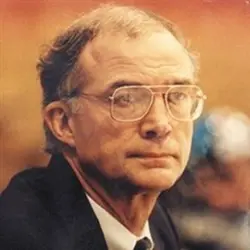
Brian Conacher ’61
Brian was a member of the 1967 Toronto Maple Leafs, the team that downed the Montreal Canadiens and won the Stanley Cup in six games. He was also a member of the Canadian hockey team at the 1965 Winter Olympic Games in Innsbruck, Austria. His book Hockey in Canada: The Way It Is! shines a light on the behind-the-scenes struggles of amateur and professional hockey. He was awarded the Queen Elizabeth II’s Golden Jubilee Medal in 2002; this honour recognizes Canadians who make outstanding contributions to their communities.
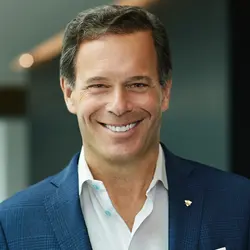
Mark Cohon ’85, OOnt
Mark is an internationally respected leader and a champion of Canadian sports, culture and community. A former executive with the NBA and MLB, he was also the 12th commissioner of the CFL, where he oversaw a period of unprecedented growth and stadium infrastructure development. Most recently, he has brought his expertise to the Northern Super League as chair of Canada’s first professional women’s soccer league.
Mark’s influence extends across business and the arts. He has chaired Toronto Global, securing more than $3 billion in foreign investment, and the Canadian Academy of Recording Arts and Sciences, where he helped transform the Juno Awards. An active entrepreneur and angel investor, he currently chairs Georgian Bay Spirit Co. and Founder Brands.
In 2012, he was appointed to the Order of Ontario. He has also been awarded the Meritorious Service Medal from the Governor General, and an honorary Juno Award for his successful stewardship of the Junos. Mark was awarded the UCC Old Boy of Distinction Award in 2026.
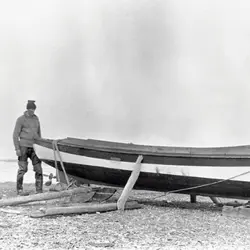
John Raffles Cox
1906
John was a famed Canadian arctic explorer. From 1913 to 1916, he explored the Fifth River, the MacKenzie River Delta and the Arctic coast. In the First World War, he served in the Canadian army; in the Second World War, he wrote many brief biographies of the “Dollar a Year” men.
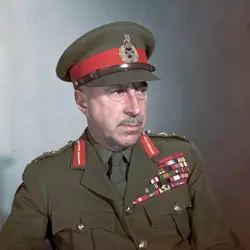
Henry Crerar
1904
Harry was 11 when he first attended UCC and he enjoyed the athletics program during this time as a student. He went on to study at RMC in 1906, then joined the militia and served in the First World War, rising through the ranks to lieutenant-colonel and receiving a Distinguished Service Order for his leadership during the final stages of the Vimy Ridge campaign.
After graduating from Staff College in England, Harry accepted a posting with the War Office in London as general staff officer. In 1929, he took on the role of general staff officer at Army HQ in Ottawa and began work on a major reorganization of the Canadian Militia. He was appointed director of military operations and military intelligence in 1935, and later commandant of RMC in 1938. When the Second World War broke out, he was posted to London as brigadier on the general staff at the newly formed Canadian Military Headquarters.
In July 1940, he was called back to Ottawa and promoted to chief general staff. In that year, he oversaw the rapid expansion of the army. Six months later, back in England, Harry was appointed general officer commanding, 1st Canadian Corps, and in early 1944, he was recalled to England to replace General McNaughton as commander of the 1st Canadian Army, the first Canadian to be promoted to full general while commanding troops fighting in war.
The 1st Canadian Army arrived in Normandy from England on July 23, 1944, and, under Harry’s command, played a major role as the Allies circled German troops in the Falaise Gap in August that year. In February 1945, with the 1st Canadian Army on their northern flank, the Allies advanced to the Rhine. When the Allies launched the Rhineland campaign, Harry was leading a 450,000-man army, including allied formations, under 1st Canadian Army command.
After the war, he oversaw demobilization and then retired in 1946. He later held diplomatic posts and was appointed aide-de-camp general to the King and Queen and to the Queen’s Privy Council for Canada.
In the words of historian J.L. Granatstein, “No other single officer had such impact on the raising, fighting, and eventual disbanding of the greatest army Canada has ever known.”
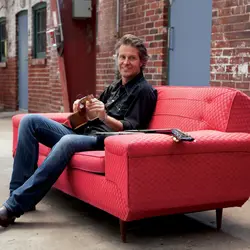
Jim Cuddy ’74, OC
An internationally renowned, two-time Juno Award–winning vocalist, guitarist, songwriter and one of the frontmen for the band Blue Rodeo, Jim has recorded four solo albums and performs live with the Jim Cuddy Band. He was made an officer of the Order of Canada in 2013.
On UCC’s impact: “At UCC, there was no stigma to being accomplished,” he says. “I got my appreciation back [for excelling].”
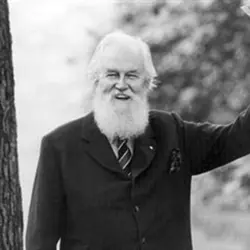
Robertson Davies ’32, OC, OOnt
A former boarder at UCC and one of the leading figures in Canada’s literary canon, Robertson is best known for his Deptford Trilogy, which includes the classic novel Fifth Business. He is a former editor-in-chief of the now-defunct Canadian magazine Saturday Night, is a noted playwright and received the Stephen Leacock Medal for humour in 1955. Robertson became a companion of the Order of Canada in 1972 and became a member of the Order of Ontario in 1988.

Leonard Dick ’82
A Writers Guild of America– and Emmy Award–winning television producer and writer, Leonard worked on TV hits like Lost, The Good Wife and House.
On UCC’s Impact: “There’s a real advantage to the Canadian sensibility. Hollywood indulges a level of bad behaviour. But it pays to be nice and professional.”
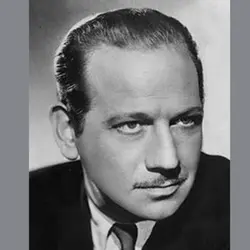
Melvyn Douglas
1913
A double Academy Award–winning actor for Best Supporting Actor, Melvyn picked up accolades for his roles in Being There and Hud, and won an Emmy for a CBS Playhouse special called Do Not Go Gently into That Good Night. Melvyn also won a Tony Award for Best Actor in Gore Vidal’s The Best Man.
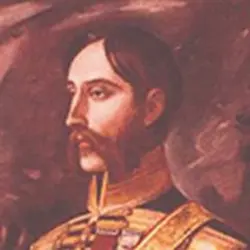
Alexander Roberts Dunn
1848
In March 1852, Alexander joined the British Army’s 11th (Prince Albert’s Own) Hussars as a junior officer. At the outbreak of the Crimean War in 1854, the 11th Hussars were sent to Russia, to join other elements of the British Army and an allied force made up of elements from France, the Kingdom of Sardinia and the Ottoman Empire.
Alexander, then a lieutenant, was in action on October 25, 1854, the day of the Battle of Balaclava, and took part in the infamous Charge of the Light Brigade.
Alexander was invested with his Victoria Cross by Queen Victoria at the first investiture held in Hyde Park on June 26, 1857.
Alexander is the first Canadian to have been awarded the Victoria Cross. In fact, not only was he Canada’s first recipient, he was also the only officer to earn a Victoria Cross for bravery during the Charge of the Light Brigade, and among the very first group of recipients to be awarded the newly created medal, generally believed to be made from Russian cannons captured during the Crimean War.
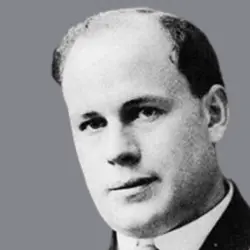
Sir John Craig Eaton
1891, OOnt
John served as president of the T. Eaton Company from 1907 until 1922, succeeding his father, Timothy, who founded the Eaton’s department store chain in 1907. Known for expanding the popular Canadian retail chain nationally, he was also a generous benefactor, who, together with his mother, donated land and funds to build the Timothy Eaton Memorial Church in Toronto. John became an Order of Ontario member in 1991.
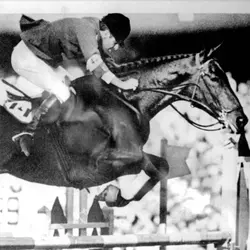
Jim Elder ’53, OC
Jim is a Canadian retired businessman and equestrian. Over his 30 years as a competitive horseman competing in international competitions, he has brought home gold, silver and bronze medals from the Pan American Games, the World Championships and the Olympic Games. He was also Canada’s flag bearer at the closing ceremony of the 1972 Munich Olympics. He continues to compete in Europe and North America.
In 1983, Jim was honoured with the officer of the Order of Canada. He has also been inducted into the Canadian Amateur Sports Hall of Fame and, in 2003, became part of Canada’s Walk of Fame. He lives in Aurora, Ont.
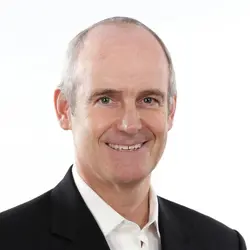
Michael
Evans ’76
Michael won the first gold medal for Canada as a member of the men’s eight rowing team at the 1984 Summer Olympic Games in Los Angeles, Calif., and was inducted into the Canadian Olympic Hall of Fame in 2003. After retiring from the sport, he worked his way up to become vice-chair of Goldman Sachs, a multinational investment bank and financial services company. He was later appointed president of China’s e-commerce giant Alibaba in 2015.
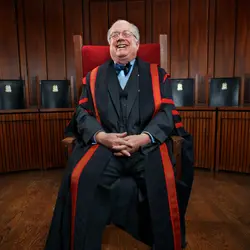
John Fraser ’63, OC
John is a Canadian journalist, writer and academic. He served as Master of Massey College in the University of Toronto from 1995 until he retired in June 2014. He is currently the executive chair of the National NewsMedia Council of Canada.
As a journalist, John received multiple national awards and chaired the Canadian Journalism Foundation until 2008. He initiated and taught a course on Canadian newspaper history at St. Michael’s College at U of T.
John has received honorary degrees from Memorial University of Newfoundland, University of King’s College in Halifax, York University and Trinity College in the University of Toronto. He’s also received medals from the Queen (Silver Jubilee, Golden Jubilee and Diamond Jubilee) and the 1967 Centennial medal.
In journalism, he has won three National Newspaper Awards, seven National Magazine Awards, and Editor of the Year from the Canadian Magazine Editors Society. His books The Chinese: Portrait of a People and Private View both won literary awards from multiple agencies.
In 2001, he was named a member of the Order of Canada, and 15 years later, he was named to the Canadian News Hall of Fame. In 2020, he was awarded the rarely bestowed lifetime achievement Michener-Baxter Special Award for public service in journalism.
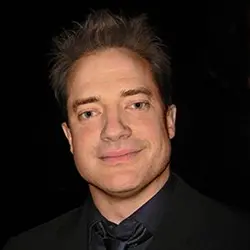
Brendan
Fraser ’87
Brendan is the first Canadian to win the Academy Award for Best Actor, for his role in The Whale. He also had leading roles in a number of other Hollywood movies, including School Ties, George of the Jungle, Journey to the Center of the Earth and The Mummy franchise. One of Brendan’s first tastes of acting came at UCC, with his role as Bernardo in West Side Story.
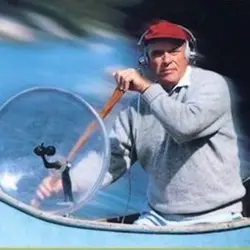
Dan Gibson ’40, OC
In the late 1940s, Dan took photographs and made nature films, including Audubon Wildlife Theatre. Producing many films and television series, he learned to record wildlife sounds and pioneered techniques of recording. He even helped design equipment to optimize results, including the Dan Gibson parabolic microphone. Some of his early recordings of the 1950s and 1960s were released on LP records, and these started his Solitudes series, introduced in 1981.
Dan has made many contributions to the Friends of Algonquin Park and the Algonquin Park Residents Association. Through his lease of land in Algonquin Provincial Park, Dan and his wife, Helen, and their children Mary-Jane (“Kirkie”), Holly, Dan and Gordon, took advantage of their opportunities to connect with nature, and it certainly fuelled Dan’s passion for wildlife preservation and interaction.
In 1993, Gibson was awarded the Order of Canada for his environmental work. Four years later, he was awarded the Walt Grealis Special Achievement Award at the Juno Awards.
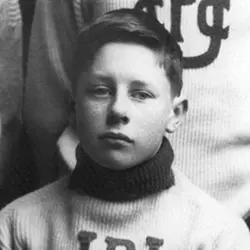
Walter Lockhart Gordon
1922
Walter was the minister of finance in Lester B. Pearson’s cabinet, chaired the Royal Commission on Canada’s Economic Prospects and was instrumental in establishing a committee for an Independent Canada in 1970. He served as chancellor of York University from 1973 to 1977.

Colin Greening ’05
Colin, a hockey left winger, was selected by the Ottawa Senators in the seventh round while he was playing at UCC. In 2016, he was traded to the Toronto Maple Leafs. After playing 286 games in the NHL and scoring 45 goals and 57 assists, he retired from professional hockey to pursue an MBA at Harvard Business School in 2019.
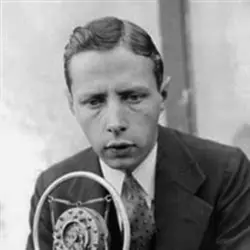
Foster Hewitt
1921, OC
Foster was considered the broadcasting voice of hockey in Canada for almost three decades. He was famous for his play-by-play of Toronto Maple Leafs games, and his claim to fame is coining the phrase “He shoots, he scores!” Foster was inducted into the Hockey Hall of Fame in 1965 and was made an officer of the Order of Canada in 1972.
On UCC’s impact: “I partially absorbed the wisdom of the masters, and while I usually squeezed through examinations, there were few indications that a noted scholar was about to appear.”
— Excerpt from his autobiography, Foster Hewitt: His Own Story, with his trademark humour
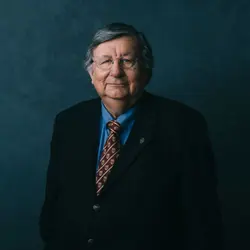
W. Barry Hill ’62
Barry left his family farm to attend UCC on scholarship, eventually earning a master’s degree in mechanical engineering design from McMaster University. This educational background supported his 26-year career with Ontario Hydro, where he helped build the province's energy infrastructure.
Upon retirement, Barry moved closer to his roots in Ohsweken, to focus on giving back to both his First Nations and Brantford communities. He taught at Six Nations Polytechnic and founded the First Nations Agri Group co-op to improve local farming efficiency. The co-op now sources supplies for more than 20,000 acres of cropland.
His achievements include being named Brant County Farmer of the Year and induction into the Ontario Agricultural Hall of Fame. Additionally, Barry and his wife established an agricultural scholarship at the University of Guelph. Among his many accolades, Barry also holds an honorary degree from McMaster University.
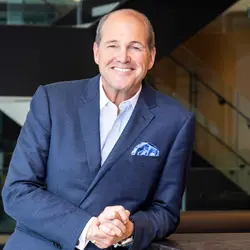
Blake Hutcheson ’80, OOnt
President and CEO of OMERS, one of Canada’s largest pension plans, Blake was awarded the Order of Ontario in 2024 as well as the King Charles III Coronation Medal, and he was voted one of Canada’s Top 40 Under 40 in 2000.
On UCC’s impact: “I learned a lot about life and responsibility as a boarder at UCC, and I’m committed to seeing it continue — better than ever — for other young men who have the privilege of experiencing this same opportunity.”
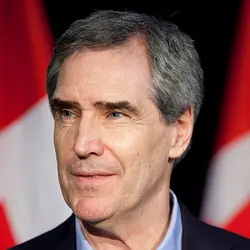
Michael Ignatieff ’65, OC
An author, television and radio broadcaster, historian, professor and former leader of the Liberal Party and leader of the opposition from 2008 until 2011, Michael has held senior academic positions at Cambridge, Oxford, Harvard and the University of Toronto. He was appointed president of Central European University in Budapest in 2016 and was named a member of the Order of Canada that same year.
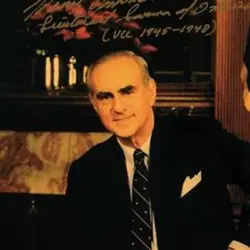
Henry N. R. Jackman ’50, OC, OOnt
Henry is a well-known philanthropist who served as Ontario’s lieutenant-governor from 1991 to 1997. He was appointed chancellor of the University of Toronto in 1997, after which he donated the largest gift of its kind to a Canadian university. He was named an officer of the Order of Canada in 2000, after becoming an Order of Ontario member in 1988.
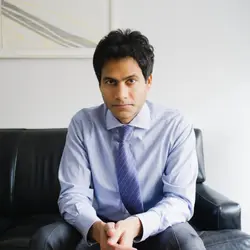
Jameel Jaffer ’90
After attending UCC, Jameel went on to study at Williams College, University of Cambridge and Harvard Law School. As a human rights and civil liberties lawyer, he became the founding director of Columbia University’s Knight First Amendment Institute, former deputy legal director of the American Civil Liberties Union and former director of its Center for Democracy.
On UCC’s impact: “I thought they were exceptional teachers at the time, and I’m even more sure of it today. It’s been more than 20 years, but I still remember specific conversations that I had with each of them.”
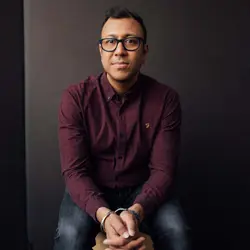
Ravi Jain ’99
Ravi is an accomplished director who helmed Prince Hamlet for the National Art Centre’s 2018–19 theatre season, and a play he performed with his mother, A Brimful of Asha, had a successful multi-year run in Toronto.
He is now the founder and co-artistic director at Why Not Theatre.
His productions have toured for many years, presented on national stages and internationally at major festivals, including off-Broadway and off–West End. Ravi was selected as the 2025 Siminovitch Prize Laureate, one of the highest honours in Canadian theatre. He was also awarded the 2012 Pauline McGibbon Award for emerging director, the 2016 Canada Council John Hirsch Prize for direction and the Johanna Metcalf Foundation Performing Arts Prize in 2022. He is the only Canadian artist to have won Dora Mavor Moore Awards, for acting, playwriting and directing.
On UCC’s impact: “Going to UCC, it was easy to feel like you didn’t have to choose the traditional path,” he says. “The school is still a part of me.”
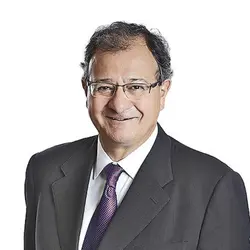
Vahan Kololian ’73, OC
After graduating from UCC, Vahan continued his studies at the Faculty of Law at the University of Ottawa. A champion of multiculturalism and inclusion, Vahan is an entrepreneur and financier by trade and also the founder of Mosaic Institute, an organization dedicated to dismantling prejudice through dialogue, outreach and inclusion. He’s also managing partner and founder of the Canada-based private equity investment firm TerraNova Partners LP. Vahan is a leader in the Armenian-Canadian community, working with local and international partners to support development and prosperity in his ancestral homeland, including efforts to resolve hostilities between Armenia and Turkey. He and his wife also support a variety of Canadian art, health care and educational organizations.
He was awarded the Order of Canada in 2021 and invested in the Order of Canada in 2025.
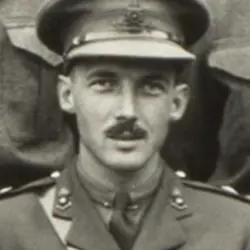
Frank Lace ’28, OBE
Frank matriculated at UCC and graduated from the Royal Military College of Canada in 1932. During the Depression, he worked in Toronto as an investment salesman and soldiered part-time with 7 (Toronto) Regiment, Royal Canadian Artillery, of the Non-Permanent Active Militia.
He married his sweetheart, Barbara Caldwell, before shipping out to Britain in January 1940. A few months later, he was a major. Frank later commanded 15 Field Regiment, RCA, before becoming a staff officer at 1st Canadian Army headquarters. He was acting brigadier in late 1944 at the age of 33 and commanded two artillery regiments. He was made an officer of the Order of the British Empire on June 8, 1944.
In October 1945, he was mentioned in dispatches for “gallant and distinguished services in the field” before receiving the Distinguished Service Order for his leadership on the battlefields of northwest Europe, where he showed “at all times great devotion to duty without regard to himself, visiting forward observation posts or making use of small aircraft to get the first-hand picture of enemy dispositions and strong points.”
Late in the war, Frank was given command of the Royal Canadian Artillery for the 2nd Canadian Infantry Division. After the war, he returned to the investment business, finishing as chairman of Matthews and Co. Ltd. from 1972 to 1975. Frank passed away on April 29, 2005.
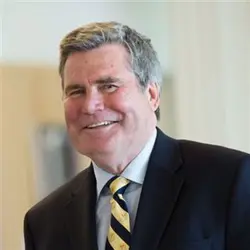
Stu Lang ’70
A professional athlete, community volunteer, philanthropist and businessman, Stu embodies UCC’s highest virtues. His enduring belief in and commitment to UCC and its students are truly inspirational.
Stu is a board director of CCL Industries, a family-controlled international business, where he was a divisional president for many years working in Canada, the United States, Mexico and Europe over the course of his 25-year career. In the ’70s and ’80s, he spent eight years in the Canadian Football League with the Edmonton Elks (then called the Eskimos), playing in seven Grey Cups and winning the trophy five times. Stu then went on to be the head coach for the University of Guelph football team for six years, playing in the Yates Cup three times and ultimately winning the trophy in 2015.
While a student at UCC, Stu was Head of Mowbray’s House; played football, hockey, track and rugby; and earned the J. Herbert Mason Medal for outstanding character and leadership. After UCC, Stu attended Queen’s University, where he studied chemical engineering and played for the Golden Gaels varsity hockey and football teams, and he was elected to their Hall of Fame.
In 2013, Stu made an $11-million gift to UCC — the largest donation in the school’s history and the largest single donation in Canadian independent school history at the time. This incredible contribution paved the way for initiatives like the Lang Scholar Program. Now in its second decade, it enables student-athletes to cultivate leadership skills and gives them unparalleled opportunities both to mentor and be mentored.
Through their continued generosity to the priorities of the College, Stu and his wife, Kim, are the College’s largest philanthropic supporters. Most recently, the Langs endowed a major gift to establish the Lang Leadership Lab — a Senior Kindergarten to Year 12 leadership development program to be launched next year across UCC’s Deer Park and Norval campuses.
As an Old Boy, Stu contributes to the College in myriad ways, including serving on various committees and as an honorary member of the Campaign Cabinet. He chaired the Athletic Review Committee, charged with enhancing the athletics curriculum, and has been an honorary member of the Foundation Board of Trustees for the past 12 years. He also served for two years as a volunteer coach of the UCC varsity football team — travelling three hours a day, six days a week, between the campus and his home near Guelph, Ont.
Stu and Kim presently manage two charitable foundations: one focuses on athletics, academics, animal welfare and adolescents, and the other supports Christian missionary work around the world.
Stu was awarded the Old Boy of Distinction Award in 2025.
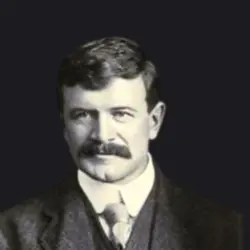
Stephen Leacock
1887
Stephen was a world-renowned humourist and author of 60 books, with Sunshine Sketches of a Little Town among his most notable works. He held a position as an economics and political theory professor at McGill University from 1900 until his retirement in 1936, and he wrote Elements of Political Science in 1906, which became the standard textbook on the subject matter for more than 20 years.
Stephen was also a UCC faculty member and master from 1889 to 1899, teaching French, serving as house master and captaining the faculty cricket team against the varsity cricket team.
As a UCC student, he was Head Boy in 1887 and editor of College Times in 1886 and 1887. Stephen won every school prize that was open to him in his graduating year.
In 1929, he chaired the Centenary Dinner of Upper Canada College in honour of the centennial.
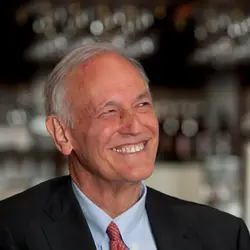
Phil Lind ’61, OC
Phil was one of Canada’s most respected communications and media industry leaders. He joined Rogers Communications in 1969, ultimately becoming vice-chairman and helping grow Rogers into one of the country’s greatest cable companies. He was proud of his success in leading the company’s expansion into the United States and negotiating valuable acquisition deals in the 1980s.
He is known for championing the development of multilingual, multicultural and specialty programming and service concepts, like community channels and CPAC, an independent, not-for-profit, commercial-free, bilingual media organization that connects Canadians to their democracy. Phil is also recognized for his commitment to public service, acting as chairman of The Power Plant Art Gallery in Toronto and founder of the Sierra Club of Ontario, and he served on the Board of the Canadian Nature Federation.
Phil, who served as the vice-chair of the UCC Board until his passing, was invested to the Order of Canada in 2002 and was inducted into the U.S. Cable Hall of Fame in 2012. Phil was the third Canadian to receive this honour, after Ted and J.R. Shaw.

Don Lindsay ’76, OBC
Don is one of the country’s most respected and impactful business leaders, recognized for his successes in shaping the mining industry through strategic vision, operational excellence and a deep commitment to environmental and social responsibility.
After graduating from UCC, Don went on to earn an honours bachelor of science in mining engineering from Queen’s University and an MBA from Harvard Business School.
In his role as president of CIBC World Markets, he pioneered Canada’s first mining-focused investment banking group, revolutionizing the way the financial sector supports the resource industry and positioning CIBC as a global leader in mining finance.
When Don took the helm at Teck Resources in 2005, the company was valued at $8 billion. Under his leadership, the company grew to a market capitalization of $22 billion, returned nearly $9 billion to shareholders, and increased its copper reserves from 2.5 million to 19 million tonnes — ensuring a 70-year reserve life based on 2022 production levels. Important acquisitions such as Aur Resources and Fording Canadian Coal ensured Teck became a leader in critical minerals, and one of the world’s largest exporters of metallurgical coal, while keeping sustainability and community at the heart of its growth. Don worked at Teck for 17 years as president and CEO.
His work on environmental, social and governance performance has been equally impactful, embedding sustainability and social responsibility into Teck’s operations. Teck initiatives like the Zinc Alliance for Child Health and programs like Copper and Health have reached more than 140 million people and influenced international policy on public health and infrastructure. Under Don’s guidance, Teck has earned recognition as one of the world’s most sustainable mining companies.
In his role as chair of the International Council of Mining and Metals, Don spearheaded the creation of the Global Industry Standard on Tailings Management, a standard that changed the safety and quality of tailings management in the mining industry.
Don has chaired many industry organizations, including the International Zinc Association, Business Council of Canada, and Board of Governors for the World Economic Forum’s mining and metals sub-group. He still serves as chair of Manulife Financial and sits on the board of directors at BHP. He also served as chair for the 2025 Invictus Games in Whistler, B.C., and has led major philanthropic efforts, including a $200 million campaign for BC Children’s Hospital.
Don has been recognized with numerous honours, including the Order of British Columbia, multiple honorary doctorates, and lifetime achievement awards from the mining and business communities. He was inducted into the Canadian Mining Hall of Fame in 2026.
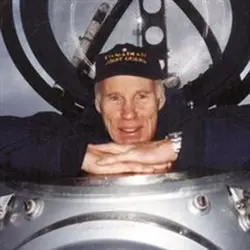
Joseph B. MacInnis ’56, OC
Joseph was the first Canadian to lay eyes on the Titanic shipwreck, and his footage of the famous wreckage inspired James Cameron to make the blockbuster Hollywood film. He also led the team that discovered the Breadalbane, a three-masted barque under the ice of the Northwest Passage and Canada’s northernmost shipwreck. Joseph was made a member of the Order of Canada in 1976, and he has also received six honorary degrees.
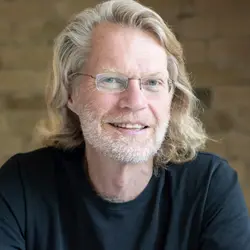
Michael MacMillan ’74, OC
Michael is co-founder of Atlantis Films and the former executive chairman of Alliance Atlantis, a TV and film production house with 13 Canadian TV networks and which was sold to Canwest in 2007. He launched Blue Ant Media in 2011; co-founded Samara, a charity dedicated to reconnecting citizens to politics; and became co-owner and co-founder of Closson Chase, a vineyard in Prince Edward County, Ont.
Michael served UCC as the chair of the Board of Governors from 2007 to 2010.
In 2014, Michael was inducted into the Order of Canada.
On UCC’s impact: “I was addicted right from the start,” he told the Globe and Mail of making films during his years at UCC. “The place tolerated it; they let me do my own thing, and that made all the difference. It allowed me to find out what I wanted to do.”
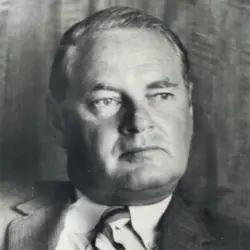
George Mara ’41, OC
George was a Canadian businessman and Olympic hockey player. He was a member of the Ottawa RCAF Flyers, which won the gold medal in ice hockey for Canada at the 1948 Winter Olympics in St. Moritz, Switzerland.
After declining an offer from the Detroit Red Wings during the Second World War, he served as a lieutenant in the Royal Canadian Navy but returned to the sport after the war ended. George played for the Royal Canadian Air Force Flyers in the 1948 Winter Olympics and was captain of the gold medal team.
After his athletic career, he became one of the founders and chairman of the Olympic Trust of Canada, the fundraising branch of the Canadian Olympic Association (now called the Canadian Olympic Committee). The trust raised millions of dollars to support Canadian athletes.
From 1957 to 1969, George was a director of Maple Leaf Gardens and briefly acted as president in 1969.
In 1977, he was invested as a member of the Order of Canada “for his tireless efforts in raising funds to support Canadian Olympic athletes competing in Munich and Montreal.” In 1993, he was inducted into Canada’s Sports Hall of Fame.
In 2001, the Canadian Forces honoured George when it was announced that the 1948 RCAF Flyers were selected as Canada’s greatest military athletes of the 20th century.

Judd
Moldaver ’00
Judd is an NHL sports agent and senior vice-president of Wasserman Hockey. He represents some of the top players and the future stars in the NHL. He was named a Top 40 Under 40 and was one of the 2020 5 to Watch award recipients by Canada’s Sports Business Awards. His clients include Austin Matthews and Connor McDavid.
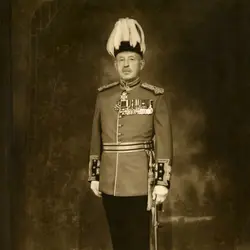
Percival John Montague
1899
After graduating from UCC, Percival attended University of Toronto, and Osgoode Hall, where he graduated in 1905. He was called to the bar in Ontario and Manitoba in 1907 and joined Pitblado, Hoskin, Montague and Drummond Hay in 1913, practising there until he was appointed to the bench in 1932. He was appointed a King’s Counsel in 1928 and appointed to the Court of King’s Bench of Manitoba in 1932.
During the First World War, he rose to assistant adjutant and quartermaster general in the 2nd Canadian Division by 1917, by which time he had been awarded the Military Cross. In January 1918, he was awarded the Distinguished Service Order, and was made a CMG the next year.
He was commanding officer of the Fort Garry Horse from 1920 to 1924, and commanding officer of the 6th Canadian Mounted Brigade from 1928 to 1936. From 1932 to 1940, he was aide-de-camp to the Governor General of Canada.
When the Second World War broke out, he took a second leave of absence from the bench and was posted to the Canadian Military Headquarters in London, as assistant adjutant and quartermaster general, deputy adjutant-general, chief of staff and chief administration officer. He was appointed judge advocate general Canadian Army Overseas in 1943 and retired two years later with the rank of lieutenant-general.
After the war, Percival returned to the Manitoba bench and was raised to the Manitoba Court of Appeal in 1951. He retired in 1959.
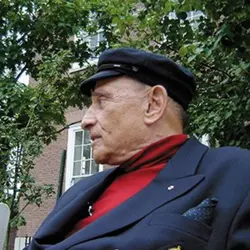
Peter C. Newman ’47, OC
A pre-eminent Canadian journalist with an impressive six-decade career, Peter is the author of 20-plus books and a former editor of the Toronto Star and Maclean’s magazine. He was awarded a companion of the Order of Canada in 1990, and has received countless honours from peers, including a lifetime achievement award from the Canadian Journalism Foundation.
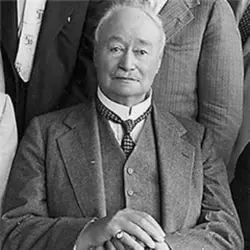
Sir Henry Pellatt
1876
Henry served as a rifleman with the Queen’s Own Rifles of Canada, for which he was knighted by King Edward VII. He co-founded the Toronto Electric Light Co. and was instrumental in bringing hydro-electricity to the streets of Toronto. He also built Casa Loma, his castle-like personal residence south of UCC, in 1914, which is now a major Toronto landmark.
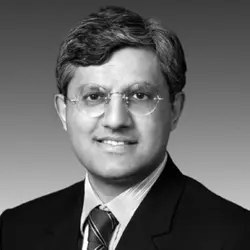
Shafiq Qaadri ’82
Shafiq is a Canadian politician and physician who is well known for his commentary on medicine and public health, as well as his tenure as a member of provincial parliament. He represented Etobicoke North in Ontario’s legislature from 2003 until 2014. He has served as a parliamentary assistant to the ministers of health promotion, government services and children and youth, as well as to the premier of Ontario. In 2012, Shafiq was awarded Queen Elizabeth II’s Diamond Jubilee Medal.
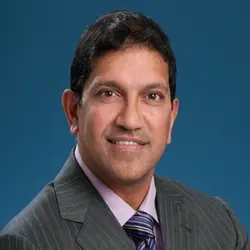
Vivek Rao ’86, OC
Vivek is a Toronto-based cardiac surgeon and researcher. A Fellow of the Royal College of Physicians and Surgeons of Canada, he was the youngest faculty member to join the University of Toronto’s cardiac surgery division and the second-youngest chief of cardiac surgery appointed at the University Health Network division of cardiac surgery. Vivek is the Munk Chair in advanced cardiac therapeutics at the Peter Munk Cardiac Centre, Toronto General Hospital, and senior scientist in the division of experimental therapeutics at the Toronto General Research Institute. He was named one of Canada’s Top 40 Under 40 by Caldwell Partners, and in 2020, Vivek became a member of the Order of Canada.
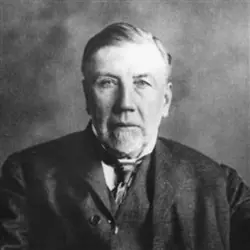
John Ross Robertson
1850
John was a dedicated philanthropist who was instrumental in the creation of Toronto’s Hospital for Sick Children, and he served as chairman of the trustees’ board for the hospital for 27 years, during which time he attracted major financial support from prominent donors.
When at UCC, he started a newspaper called Young Canada and a satirical weekly magazine called The Grumbler, published in 1864.
He was hired as a reporter and then city editor at the Globe in Toronto, but left to found the Toronto Daily Telegraph in 1866. That paper lasted five years, and John went to England as a reporter for the Globe. He returned to Toronto in 1876 and convinced his friend and former colleague Goldwin Smith to loan him $10,000 so he could launch the Toronto Evening Telegram. In that publication, he wrote a recurring column on Toronto landmarks. The Evening Telegram was a success from the start and John was soon a wealthy man. Eventually these columns were published in a book called Robertson’s Landmarks of Toronto, which consists of six volumes.
John was elected to the House of Commons of Canada for the electoral district of Toronto East in the 1896 federal election, defeating the incumbent Conservative MP, Emerson Coatsworth. An Independent Conservative, John did not run for re-election in 1900.
The world of sports was also a focus for John’s public-spiritedness. A fervent advocate of amateur sport, he served as president of the Ontario Hockey Association from 1899 to 1905, which was a critical time period in the history of the sport. His battle to protect hockey from the influence of professionalism caused him to be called the “father of amateur hockey in Ontario.”
He was inducted into the Hockey Hall of Fame in 1947.
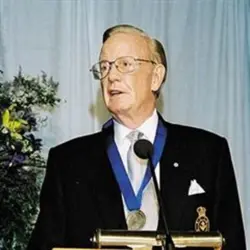
Edward (Ted) Rogers ’51, OC
The founder of Rogers Communications, Ted is attributed with being responsible for introducing Canadians to cellphones and high-speed internet. He was also an advocate for Junior Achievements of Canada, which is one of Canada’s biggest business and economic education organizations, partnering educators and corporate volunteers to provide hands-on learning in financial literacy, entrepreneurship and work preparedness. Ted was a renowned philanthropist, and was named an officer of the Order of Canada in 1990.
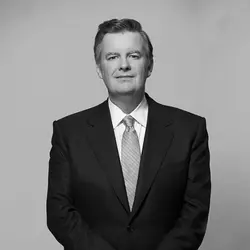
Edward S. Rogers III ’88, OOnt
Executive chair of Rogers Communications, Edward was named Business Leader of the Year by the Canadian Chamber of Commerce in 2025. He is a prominent figure in both the telecommunications and sports worlds, as he chairs the Toronto Blue Jays and Maple Leaf Sports & Entertainment. Edward and his wife, Suzanne, support a variety of charitable causes, with emphasis on health care, education and other community initiatives. He was appointed with the Order of Ontario in 2025.
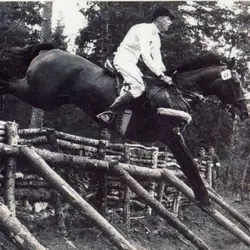
John Rumble ’53
John was a Canadian equestrian. He was a member of the Canadian national equestrian team in eventing, and he won a team bronze medal in eventing at the 1956 Summer Olympics in Stockholm, Sweden, together with teammates Jim Elder and Brian Herbinson. He placed 16th in individual eventing. In 2009, John was inducted into the Canadian Eventing Hall of Fame.
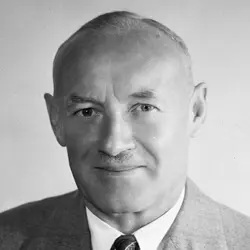
Conn Smythe, OC
1909
Constantine was a Canadian businessman, soldier and executive in ice hockey and horse racing. He was best known as the principal owner of the Toronto Maple Leafs of the National Hockey League (NHL) from 1927 to 1961 and as the builder of the Maple Leaf Gardens hockey arena.
His name appears on the Stanley Cup eight times. He was inducted into the Hockey Hall of Fame as a builder. In his honour, the NHL established the Conn Smythe Trophy, given to the most valuable player of the Stanley Cup playoffs.
As a soldier, he earned the Military Cross “for conspicuous gallantry and devotion to duty.”
Conn was appointed to the Order of Canada in 1980.
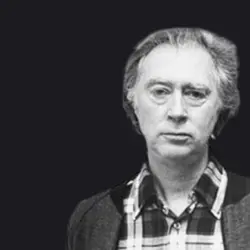
Michael Snow ’48, CC
Michael was a world-renowned multimedia artist known for his Walking Woman series, the flock of Canada geese that grace Toronto’s Eaton Centre (entitled Flight Stop) and the sculptures of cheering fans (called The Audience) adorning Toronto’s Rogers Centre. He was made an officer of the Order of Canada in 1981, and promoted to companion in 2007, and he received the first Governor General’s Award in Visual and Media Arts in 2000. Michael was the recipient of numerous other awards and honorary degrees.
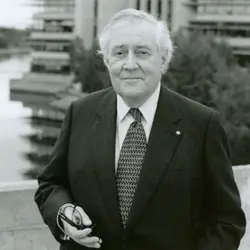
Thomas Symons ’47, CC, OOnt
Thomas was a great Canadian educator and innovator who thrived on civic responsibility. He was teaching at the University of Toronto when a committee of citizens from Peterborough, Ont., approached him about creating a university there. He became the founding president and vice-chancellor of Trent University and remained at the university until his retirement in 1994. At Trent, Thomas started Canada’s first university Indigenous studies program, created a Canadian studies program and founded the groundbreaking Journal of Canadian Studies.
In addition to his dedication to Trent, Thomas had a strong commitment to Canada and served the country, the province and its communities well. He was chair of the Ontario Human Rights Commission from 1975 to 1978, chair of the board for the United World Colleges from 1980 to 1986 and president of the Ontario Heritage Trust from 2010 to 2017. He helped establish a landmark Ontario–Quebec Educational Exchange Program that continues today and he led the “Symons Commissions,” which laid the basis for French-language education in Ontario.
His contributions to the country were recognized by his appointment as a companion of the Order of Canada in 1997, with 13 honorary degrees and appointment to the Order of Ontario, among other honours. He also received the Queen’s Silver, Golden and Diamond Jubilee Medals and the Canadian Centennial medal.
Thomas was awarded the Old Boy of Distinction Award in 2021.
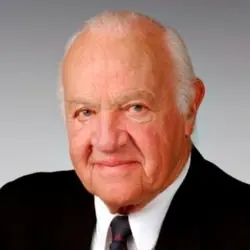
Vic Spencer ’43
Victor’s interest in football began during his years at UCC, where he captained the first team in 1942. After the war, he played senior football in Vancouver (Merloma) and with the Hamilton Tigers of the Ontario Rugby Football Union; in 1950, he spearheaded a group seeking a B.C. franchise in the Western Interprovincial Football Union, which was granted in 1953.
Victor originally struggled to attract local players to join the BC Lions and eventually turned to recruiting players from the NFL and American universities. After a court battle, the BC Lions was permitted to sign players from the United States, setting the precedent for American players to play in Canada.
Victor spent almost 10 years on the Lions executive board and helped Vancouver attract the 1955 Grey Cup. He was nominated as a life member of the team’s board of governors. The Victor V. Spencer Athletic Scholarship, established in 1965 at Simon Fraser University, offsets a football player’s education costs.
He was awarded the inaugural Lionbacker Certificate in 1976 to kick-start a franchise-saving bond drive. Victor was inducted into the BC Lions Wall of Fame in 2002.
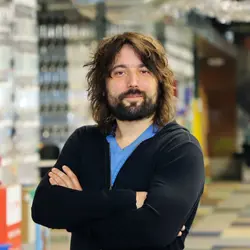
Tom Szaky ’01
Tom is the founder and CEO of TerraCycle, a global leader in recycling hard-to-recycle materials. His company has won more than 50 awards for entrepreneurship, and Tom was named the #1 CEO Under 30 in the July 2006 issue of Inc. magazine.
On UCC’s impact: “The big thing I appreciate, that was unique to the setting, were the resources, the extras. It wasn’t just geography. I came up with ideas and I could test them. A big part of education is testing,” he told the Globe and Mail. “I was able to run a big fashion show, which had never been done before. It was the biggest production the school had ever seen. I was able to look beyond grades and think outside the box.”
Tom received the Young Old Boy of Distinction Award in 2021.
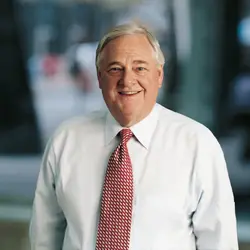
John
Thompson ’60
John enjoyed a 36-year career with IBM, beginning as a systems engineer in 1966. He became president, CEO and chair of IBM Canada Ltd., and later executive vice-chair and member of the board of directors of the worldwide IBM Corporation in New York. He was responsible for technology, research and development, and corporate strategy.
After retiring from IBM, John went on to serve as chairman of the board of TD Bank Financial Group.
Although his resumé is filled with chairs and directorships, John always made time for UCC. He has served as a member of the UCC Board of Governors, as a member of the Principal’s Advisory Committee from 2007 to 2008 and as part of the Campaign Leadership Council from 2010 to 2011. A huge supporter of UCC, John also assisted with enhancing IT capabilities at the College.
John has unselfishly given his time and counsel to other organizations as well. Among John’s past volunteer contributions are service as chancellor of Western University, vice-chair and trustee at SickKids Hospital, vice-chair of Royal Philips NV, and directorships at Thomson Reuters, the Conference Board of Canada and the Business Council of Canada.
His work has been recognized with numerous awards, including induction as an officer of the Order of Canada in 2013 for his leadership in the information technology sector and for advancing research partnerships between industry and academia. He has also received honorary doctoral degrees from Western University and Wilfrid Laurier University.
While a student at UCC, John was a prefect, a championship swimmer, an active skier and a member of the football team.
He was awarded the Old Boy of Distinction Award in 2023.
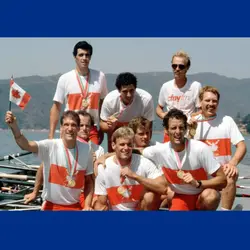
Pat Turner ’80
Pat was a member of the men’s eight rowing crew at the 1984 Los Angeles Olympics. They won Canada’s first gold medal in men’s coxed eight. He was also awarded a gold medal at the 1986 Commonwealth Games for the coxless four event. He later went on to become an emergency room physician at the University Hospital of Northern British Columbia.
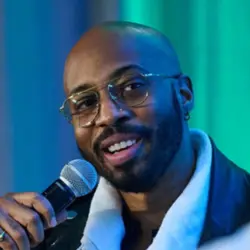
Jared
Walker ’05
Jared A. Walker is a writer, political strategist and nonprofit leader serving as executive director of Canadians for Tax Fairness, Canada’s leading think tank dedicated to advancing fair taxation and economic justice.
Jared began his career leading student organizing efforts in New York State for Barack Obama’s 2008 presidential campaign before holding senior roles within the New Democratic Party (NDP). These included serving as communications director for Jagmeet Singh’s barrier-breaking federal leadership campaign and as director of digital communications and speechwriting for the Ontario NDP.
The first Black speechwriter for a major federal party leader in Canadian history, Jared is also the founding chair of the Black Youth Fellowship at Toronto City Hall, a program dedicated to empowering the next generation of Black leaders in public service.
With more than 15 years of experience in media, public policy, and politics across Canada and the United States, Jared is a sought-after commentator and speaker with work that has appeared in national outlets including the Globe and Mail, Toronto Star and CBC. He also serves as vice-chair of the Board of Directors of the Broadbent Institute, Canada's leading social democratic public policy think tank.
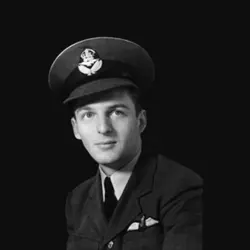
John “Scruffy” Weir ’38
After attending UCC, John enlisted for war service on September 4, 1939, when he was just 20 years old. After attending flight training in Winnipeg, he earned his wings and was posted to No. 401 Squadron at Lincolnshire, near the Scottish border in England. He gained his “Scruffy” nickname while still in flight training. A RAF group captain who inspected the training unit saw the young John in a uniform spattered with glycol and said that he looked rather “scruffy,” and the nickname stuck.
John was shot down while engaged in coastal defence duties and was burned while trying to escape his aircraft. He was able to bail out of the crippled aircraft but was captured by the Germans and sent to Stalag I on the Baltic. In mid-April 1942, he and his fellow prisoners were marched out of the camp and put on a train to Stalag Luft III. This is the camp made famous by the movie The Great Escape.
John became a member of the Escape Committee at the camp and applied his pre-war mining experience in Canada to helping construct the escape tunnels. He was removed from the operation after his eyes became infected from working underground (his eyelids had been severely burned when his Hurricane was shot down). He was sent to another POW camp to have eye surgery performed and he missed the Great Escape from Stalag Luft III. He eventually escaped from that camp after bribing a German guard and was able to make it back to England.
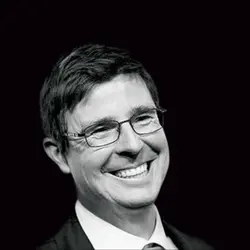
Galen Weston ’92, OOnt
Galen is chairman and CEO of George Weston Limited, and executive chairman and former president of Loblaw Companies Limited. He became an Order of Ontario member in 2004.
On UCC’s impact: “I learned the power of good communication, whether it was from my English teacher Ross Morrow, who taught me how to succinctly put words on a page, or Marshall Webb, who taught me how to engage emotionally on the stage.”
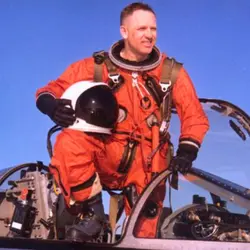
Robert “Bud” Allan White ’48
Bud was a fighter pilot, part of the Avro Arrow test pilot team and an astronaut.
In Canada’s centennial year, Bud reached 100,110 feet in the Lockheed-built original CF-104 — a high-altitude record that captured the nation’s imagination and one that still stands to this day.
As a test pilot, he flew 52 different aircraft types, including the CF-3 Freedom Fighter, Hawker Hunter, CF-100 Canuck, C-119 Flying Boxcar, Vampire, Harvard, Sabre, Gloster Meteor, C-117 Falcon, B-23 Mitchell, Huey helicopter, Canso and CF-104 Starfighter.
He was pre-selected to join the Avro Arrow flight test team and returned to England in 1959 as a flight lieutenant to attend the Empire Test Pilots’ School at Farnborough.
Three years later, Bud was loaned to NASA for the Mercury and Gemini manned programs, where he oversaw pilot safety, man-rating and acceptance programs, with operational responsibility for engines, propellants and loading systems. As a flight safety officer, he was responsible for the safety of the early astronauts — Gordon Cooper, Gus Grissom, Wally Schirra, Alan Shepard, Dick Slater and John Young.
In 2009, the B.C. Aviation Council honoured Bud with its prestigious lifetime achievement award in recognition of “his notable achievements and distinguished service in military and civilian aviation.” He was also made an officer of the Order of Military Merit by the Governor General of Canada, and was inducted as a member of the “First Class” of the new Canada’s Aviation Hall of Fame.
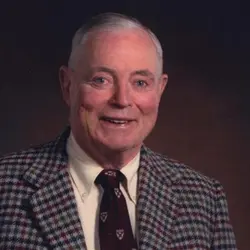
Bill Wilder ’40, OC
Bill left McGill in his second year to join the Royal Canadian Naval Volunteer Reserve and served as an officer on a Royal Navy destroyer in the English Channel in 1942. After the war, he completed his degree, earned his master’s at Harvard Business School and became a leader in the business community, eventually as president of Wood Gundy. Over the years, Bill became increasingly active in public policy, serving as an adviser to numerous companies, government and not-for-profit institutions.
Meanwhile, his philanthropic streak is legendary. Bill ran the E.W. Bickle Foundation (named for his father-in-law) for decades and is a significant donor to many arts, church, military, industry and education causes, as well as an adviser, fundraiser and board member for many esteemed organizations. He is a recipient of the 2017 Order of Canada, and in 2018 was awarded the Legion of Honour, France’s highest honour for military merit.
Bill received the Old Boy of Distinction Award in 2019.
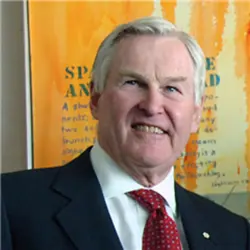
Michael Wilson ’55, CC
A former member of Parliament and finance minister under Brian Mulroney’s leadership, Michael held many significant positions in Canadian institutions. He was former chancellor of Trinity College and former chancellor of the University of Toronto, former Canadian Ambassador to the United States, and appointed an officer of the Order of Canada in 2003 and promoted to companion in 2010. Michael, our Old Boy of Distinction 2018, passed away on Feb. 10, 2019.
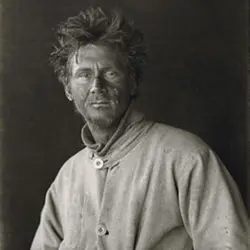
Sir Charles Wright
1904
Charles was a Head Boy at UCC and later went on to become an explorer and scientist.
He acted as expedition glaciologist and assistant physicist on Robert Scott’s South Pole expedition crew in 1911.
Charles began his military service in 1914 with the Royal Engineers in France. After a distinguished career in the First World War, during which he helped develop trench wireless and gained the Military Cross and the Order of the British Empire, he joined the Admiralty Research Department in 1919.
By 1929, he was superintendent at Teddington, and a few years later, he acted as director of scientific research at the Admiralty. He was active in the British Admiralty during the Second World War and played an important role in the development of the Allied radar system and developing devices to detect magnetic mines and torpedoes. He was knighted for his work in 1946.
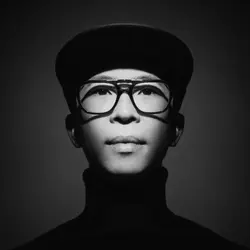
Justin Wu ’04
Justin is known as an award-winning Toronto-based feature film and TV director, photographer, creative director and speaker.
As a fashion photographer and short-film director, his micro-film Overtime won the audience award at the TIFFxInstagram Shorts Festival in 2017. He has also contributed his talents to brands like Vogue, Elle and GQ.
Justin was awarded the UCC Young Alumni Award in 2022. He was also the recipient of the Young Old Boy of Distinction Award.
On UCC’s impact: He says his UCC teachers recognized his ultimate career path before he did. “They told me I was destined to work in the arts!”